
We had an old Volvo for the weekend from Laila’s father – Laila, Teresa and I. A beast of a car, reliable, practical, yet full of the impractical collections of bits of metal and cardboard-wrapped breakables of a glass blower. We moved the boxes to the hatchback, and headed out east, stopping at three separate locations. Teresa chose Seelow Heghts, the site of the penultimate major battle of the Red Army on their push to Berlin. Laila chose the place in Poland where Friedrich the Great watched his boyfriend be beheaded by his own father. I chose Rüdersdorf to visit the historic medieval limestone quarry. A decision that left the others a bit unimpressed. Yet I will always tend to favor sites that have “historic” and “medieval” in their title. Perhaps it is the American in me, or the Renaissance Faire lover.
At the site, there was a limestone quarry that dated back 900 years. We began to explore its caverns, climbing over the elegant architecture, entering into its practical geometry. it was shaped like a chimney with different access points at varying heights – for the lighting of fires, for the addition of shale, for the collection of shale. The cone shape stuck straight into the sky. In the middle was a space for limestone that had been mined from the quarry. Underneath that was a fire pit, which would heat the limestone shards, and then the newly carbonized pieces would crack and fall to the collection plate. These would then be mixed with water and sand to make cement.
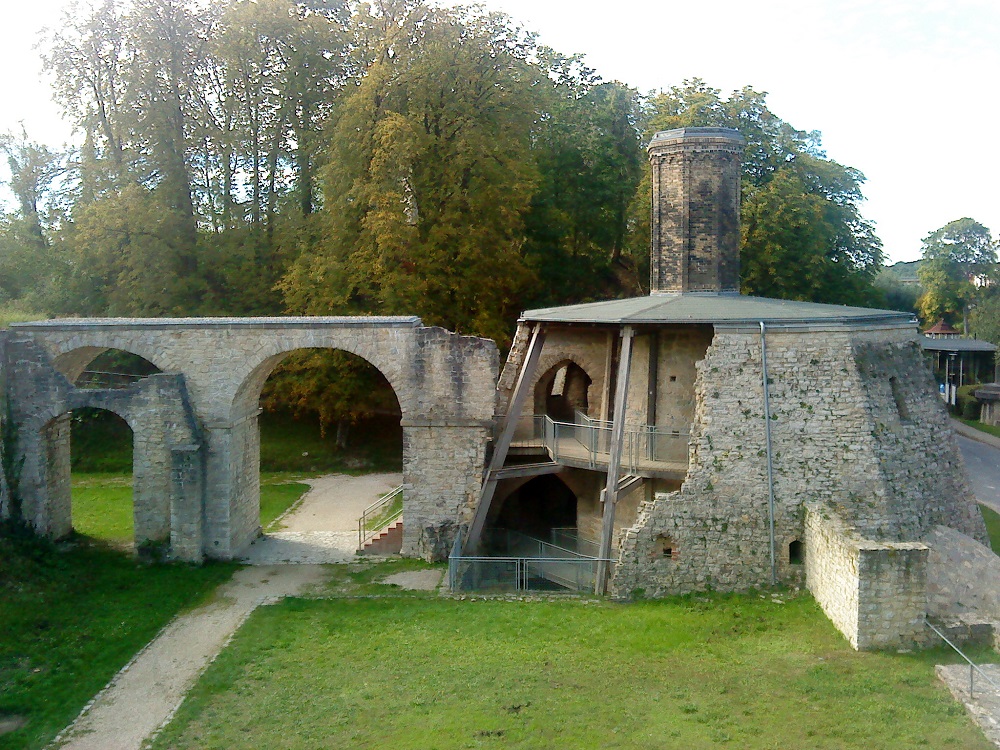
We climbed through it, thinking this would be the end of our foray. One down, two to go. But as we continued the walk, and realized that it was a series of factories, each built in succession, the next innovations on display. It was like looking at a physical timeline of cement production.
The next cement factory was built and expanded between the1890s and 1930s. It was a colossus of a construction, although utilizing the same concept as the earlier cement factory. It had a series of cones that would hold the limestone, and a furnace to heat it underneath to carbonize the shale. The major difference was that this one happened to have a lot of cones, and was made from a standardized shape of brick, instead of the cobbled construction of stonework that defined the earlier factory.

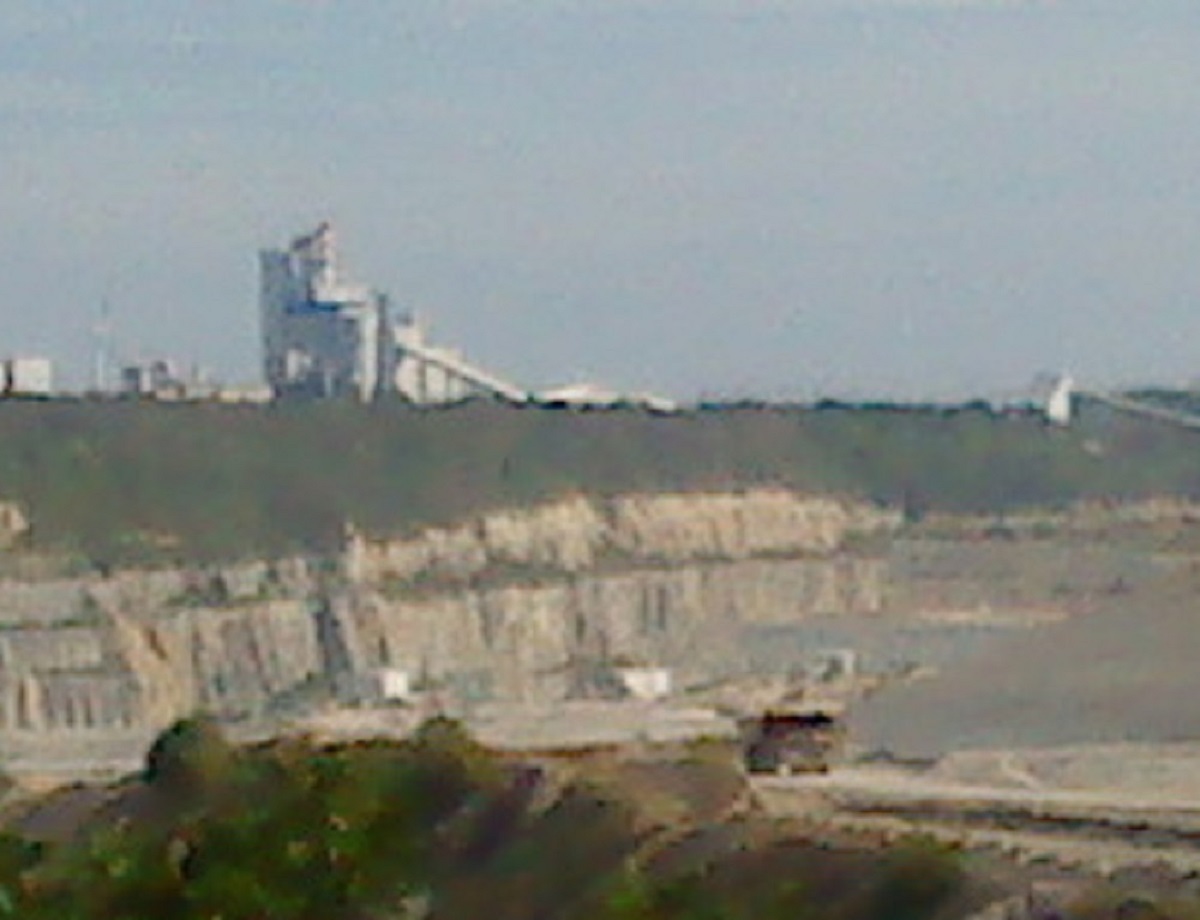
Then we saw it – the hole in the earth. It was massive, as if Gaia had been picking at a scab. The quarry was more like a valley, open and full of tiny toy tractors, which one could only assume were full-sized when closer. As we stood on top of the hill looking out over the manmade oubliette, a worker approached in a truck. We thought we were about to be chided for wandering too close to the work site, but he excitedly jumped out of his truck and began telling us about the quarry. He said that he worked for a company called Cemex, who made both cement and mortar. He explained the difference in limestone, as the yellowed sides were for mortar, while the gray streaks in the ground were for cement. He pointed to two large containers out in the distance past the quarry, stating that these were the new ovens for the detritus. The building was a square structure with a long flue out the top. It looked like Cape Canaveral, if we were to build one on the moon for its opposite purpose – to come back home. The shape was no different from the construction from the 12th Century, only with a steel frame, and a chimney height impractical all those centuries ago. Our interlocutor went on to explain that this would be a working quarry up until 2062, at which point they expected to run out of limestone, and the remaining hole would be filled with water and turned into a lake.
I scoffed. Once our amicable German left, I stated that it was naïve and presumptuous to assume that such a process was going to happen. Germany had not had the same regime for 50 years straight since its inception, so how can we assume such a long-term plan? Just another example of the arrogance of the present, I stated as we made our way back through the years of stone work, and toward our car. Yet Teresa countered my point as we came back to the entrance and we saw the first construction from the 12th Century. There had been continuity at the quarry for the past 900 years. They had been consistently digging deeper into the earth, removing the converted biomass of mollusks and shells for that long, what is to say they would break from the plan now? I had to concede the point. History is full of continuities, more so than historians would like to admit. Regimes change, and the ways in which we exploit our resources might get a new facelift, but the basic tenets remain. It is hubris to think that we can expect our current values and patterns so far into the future, but more foolish to think that nothing will remain the same. So I might as well plan to come back for a dip 2062, if the earth doesn’t swallow me up, or Gaia pick me out.
 Bodies of Water