
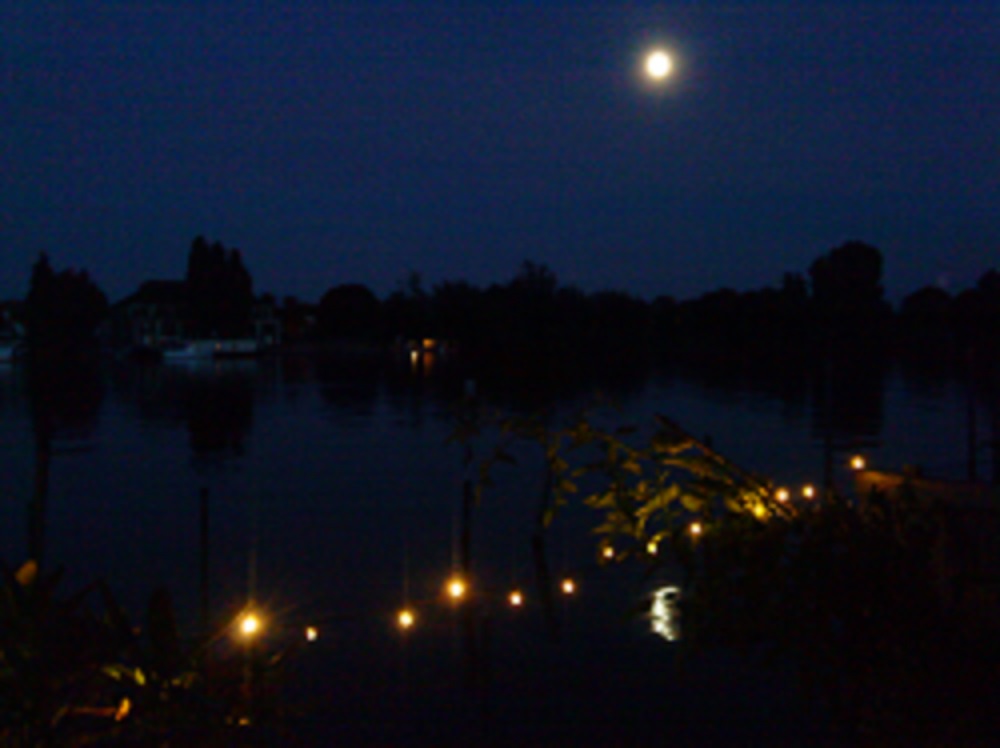
The window of our small sitting room faces east. On clear mornings the sun will stream in, warming our small day bed that sits under the sill. I’ve always enjoyed east-facing houses; there is something about that cardinal direction. Henry Miller once wrote that he always wrote facing east, as this was the direction that the earth traveled through space. He liked to meet the cosmos head on.
On my little island, this is what I like to imagine, that this is the edge of the infinite, and I am at the precipice. I like to be reminded that we are in space, and we live within a very particular set of parameters that allow us to exist. And that we do not really understand any of it. Humans kind of understand how we see the world, and that is pretty much the limit of our understanding.
This is something that scientists seem to ignore as much as humanly possible – we collect knowledge based off observation, yet we also know that the act of observation changes reality. Observation does not portend results, only results when observed. As such, we can only glean information about the world around us through our own senses, which, in turn, skew our results.
Science, as it continuously does, is coming up against many difficult questions. It is something that Copernicus faced when he really pushed for a new vision of the solar system, or Darwin found himself challenging when he published the Origin of Species. And now we might be up against something completely different. It might not be in the direction of science as we know it, but using nontraditional scientific sources to understand the non-sensual universe. Science relies heavily on faith. We have to assume that things will act the way they did in the past. That is how the laws of nature work. This is science. And anything that is not testable is a nonissue.
Yet scientists, through their own studies, are finding that they are simply working with a model that does not seem to be applicable, that our current view of the world is flawed in some basic way. Which way is that, I really don’t know. But whatever it is, I am going to continue to look to unlikely places for my inspiration. Science gives us an incredibly useful way in which to test and measure the observable world, although it might not give us all the answers that we seek.
And this comes back to Henry Miller. Does it matter where he sits? Does it actually affect my writing whether I sit here, facing east, or at the desk in my apartment, facing south? Do these things actually play a role? These are not questions that could really be answered definitively. They are subjective. I could go about it scientifically, doing hour-long stints in each cardinal direction, keeping track of my word count over days and months. But it is really a question of what what resonates with me.
This is something that I try to keep in mind, as I am from a family who reads their horoscopes. I know what you are thinking – that I am living up to every Santa Cruz stereotype. Perhaps, but both my mom and I read our horoscopes (although my brother, the Spock of the family, does not). My mom and I even have a favorite, his name is Rob Breszny, and he writes Free Will Astrology, which is combination of both personal philosophy and astrological musings on the shape of the universe. Astrology has been around for thousands of years. It is a body of knowledge that has never really been disproved, mostly because it cannot really be disproved. It is not a single entity, nor does it have precise controls to it. The amount of literature, and the variation of sources is formidable to say the least. It comes from traditions that stretch the globe. But astrology has stayed current for so long because of a few factors.
The first has to do with simple vanity. Anyone who has flipped through a magazine and landed on their horoscope knows the feeling. Even if you don’t believe a word of it, you read it because it is about you. And everyone’s favorite word is their own name.
The second is based on universality. They are usually broad and can be interpreted many ways. Although horoscopes can be incredibly precise. For my thirtieth birthday, I received a reading from my mother of my entire birth chart, where every planet and major satellite was on the hour of my birth. Yet for most horoscopes, we hear universal explanations, things that can apply to most people. As a Leo, I do not relate to all other Leos. All Leos will most likely not have a similar day, nor will we all be lucky in love this week. But sometimes we hear something that does make sense. When that happens, it resonates with us. It is something that we might think back on again, and, maybe, if we are quiet enough, it can teach us something about ourselves and the way we see the world.
The third factor is perception. We are, at this moment, sitting on a rock. That rock is currently moving through space at 108,000 km/h. There are other celestial bodies in space. These bodies, our place in the universe, affect us. If you do not think so, talk to any woman whose menstrual cycle has lined up with the phases of the moon. What is the connection between menstrual cycles and the moon? No clue. But that connection is what astrology tries to explain. It gives us an insight into ourselves not just as social creatures in the world, but as celestial bodies ourselves. Science tries its best to ignore these aspects of our lives, because they are complicated and immeasurable with the scientific world’s proscribed technology. Yet our bodies are defined by those liminal spaces that no one really seems to understand.
Astrology stands as a chance to peer into the abyss that is above us in the night sky, and to witness the abyss that lives within ourselves. I do not think about astrology as a way to understand whether I should sign a contract this month. I think about astrology as a way to keep me connected to the universe around me. It helps me feel the spin of the earth, that feeling Henry Miller felt when he sat at his east-facing desk as he tried to understand himself as man and satellite.
 Bodies of Water