
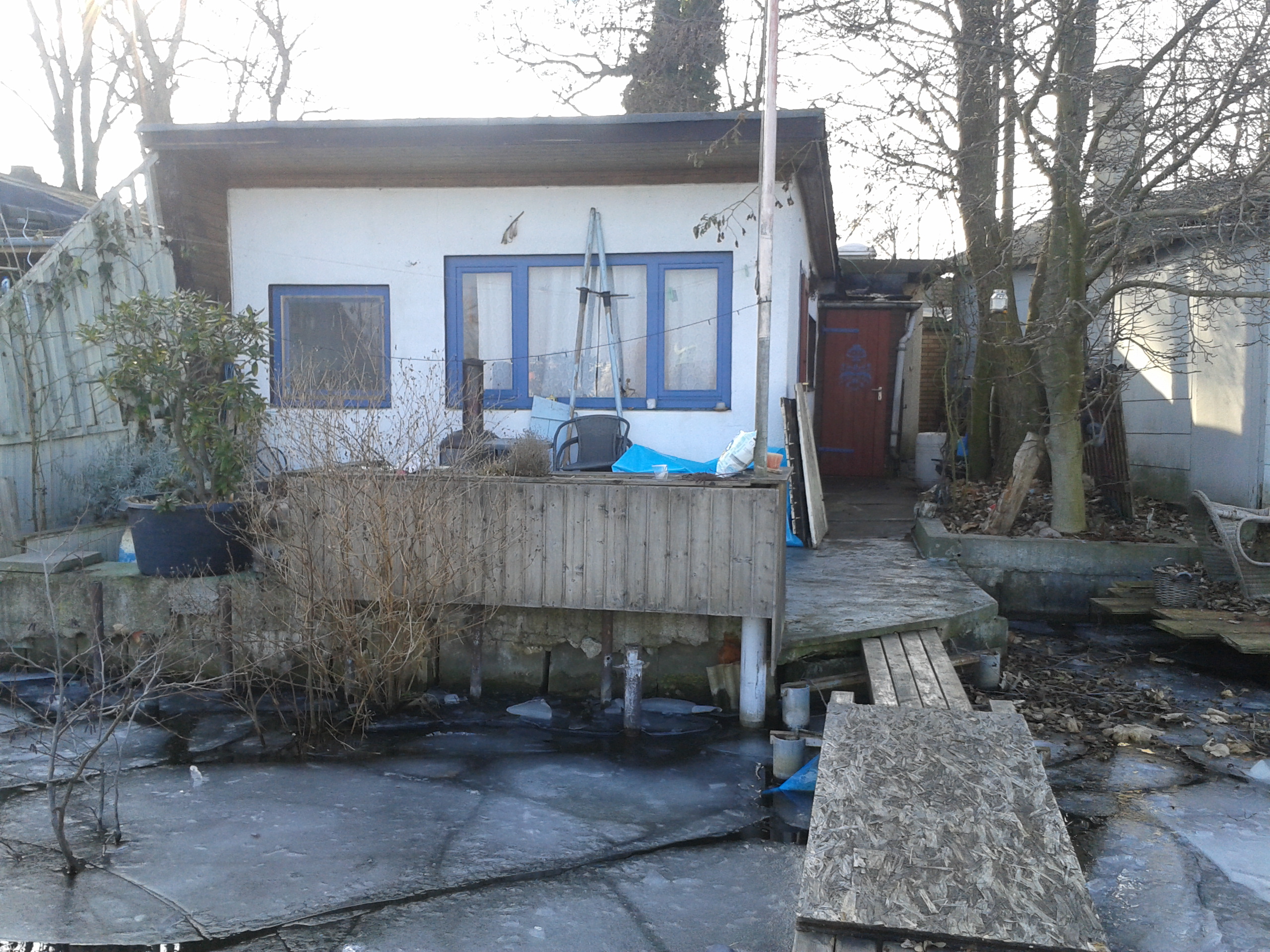
In the winter the Havel river can sometimes freeze over. it does not happen every winter, but it does happen. On the island, this can be a challenging development, not only because our tiny house lacks any insulation and our only firewood are panels requisitioned from an old boat. Despite the weather, I headed up to the island the day I turned in my Master’s thesis. It was sunny and warm – ten degrees Celsius – the warmest day of the year to date. The sun appeared between clouds and reflected across the frozen expanse of the Havel river – a tiny Antarctica. I called the island phone for someone to pick me up. Clemens, the owner of the island, came out and collected me. He used the oar to hack and push the big chunks of ice out of the way, as the sounds of scraping – akin to nails on a chalkboard – echoed in the wake of our slow progress.
Once reaching the other side, he handed me the island phone, as it was now my turn to pick up the next arrival.
Once we were on the island, I felt like I had arrived somewhere altogether new. It had been two months since I had set foot on Kleiner Wall, and it felt like a different world. What surprised me most were the birds. Normally, we catch sight of a few herons or cormorants, or a raft of ducks. Yet this time the entire river was covered in big floes, forcing the birds to congregate near the bridge, about 50 meters north of us. The other piece of open water was the small lane created by the movements of the island boat. This meant that there were about twenty cormorants surrounding one open area. Their heads were raised, as if they were having a most pretentious discussion, perhaps of the opal trade in India, or the parking situation at Wimbledon. I assume they were British.
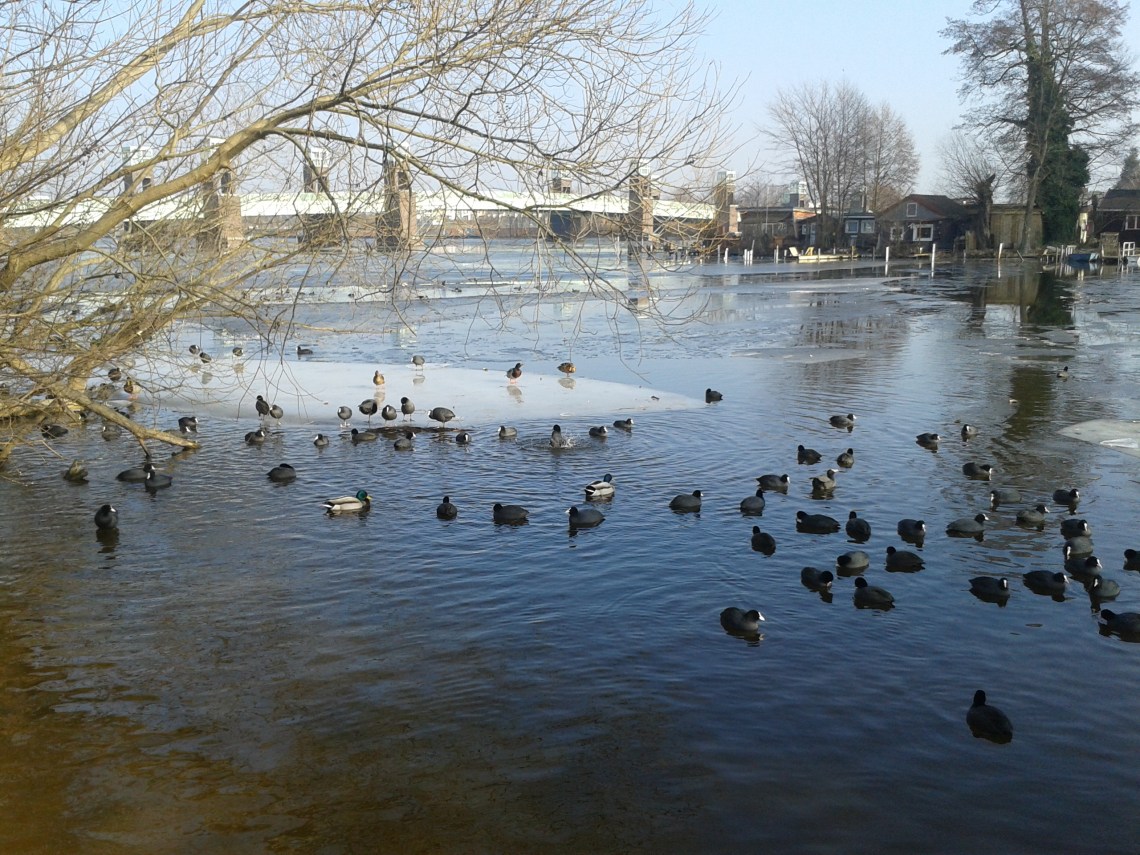
Then came the geese. I heard them before I saw them. They came swooping in from behind me, heading straight for the patch of water. I watched the leader as she steered the group toward the sliver of open water. Her wings curved awkwardly, she landed in a small floe in the middle of the water, her body sliding across the ice in a most impressive display of balance. The others did not bother for such a dramatic landing, and went straight for the exposed bit of water in front of them. They arrived in a cacophony of splashes and honks, as the ducks all swam for safety. The geese loudly harassed every cormorant, duck, mud hen, tern, and heron they could find for about two minutes before they all climbed up on shore and took off again. I can only assume they were off to harass the next group of unsuspecting birds.
After the show of geese, things began to return to a pattern, as the cormorants made consistent forays under the ice to snag any fish that might appear. The ducks wandered back and forth, while the mud hens never stopped moving. These little birds, about the size of ducks but all black with white beaks and red eyes, were constantly moving between the two open spaces of water. I had never seen them out of the water, and certainly never walking. But they would climb out of the river onto the frozen stretch between the two available sections of water, making the trip as a group. they looked quite charming as they waddled over the frozen expanse.
Right then, the island phone started to ring. Manfred was on the other line – an old Berliner who has been on the island since Clemens bought it six years ago.
I headed over and began to steer my way across to the shore. It was my first time controlling the boat by myself in ice, and I made the mistake of trying to steer it without turning the boat around. This meant that instead of a point in front to push the ice out of the way, I had the flat stern leading me, which banged into the massive chunks that floated into my path. I hacked at the ice, trying to break open a corridor for the boat to pass through. After a few minutes of chopping, getting pushed around, and paddling almost in vain, I was able to reach the other side. Manfred hopped on deftly. This time I made sure the boat was turned the right way around, and Manfred grabbed a hoe which he used to attack the pieces of ice. He chipped away at the floes, keeping our path clear.
We chatted in German as we made the small crossing, talking about warmth and sunshine. When we reached the other side, I said that this was the most frozen I had ever seen the river. He looked at me as I handed him the island phone, and in English said, “that’s because you are a tourist here.” he took the phone from my hand and walked into his house.
I was insulted to say the least, as it is always rude to be told that you do not belong somewhere that you inhabit. It is doubly insulting to be told as a foreigner that you are not part of the community. It is a constant feeling that I have – the sense of playing house in Germany. I walked back to my abode, thinking about my place on the island. Manfred lives here full time; he stays the whole winter. Am I simply an interloper, a tourist here for a bit of sunshine? I thought about all the island meetings I never bothered to attend, the polite waves instead of stopping for a chat on the way to the bathroom. And perhaps I am a tourist.
As I considered this, another swarm of geese came bellowing in. They descended on the ducks as the other birds scurried out of the way of the intruding fowl. Once again, the geese stayed for only a few minutes to honk and be a general nuisance, and then were off again. I watched them take off and tried to imagine what made them keep moving – looking for food, space, a place they could comfortably be. I tried not to judge too harshly; they were just tourists after all.
 Bodies of Water